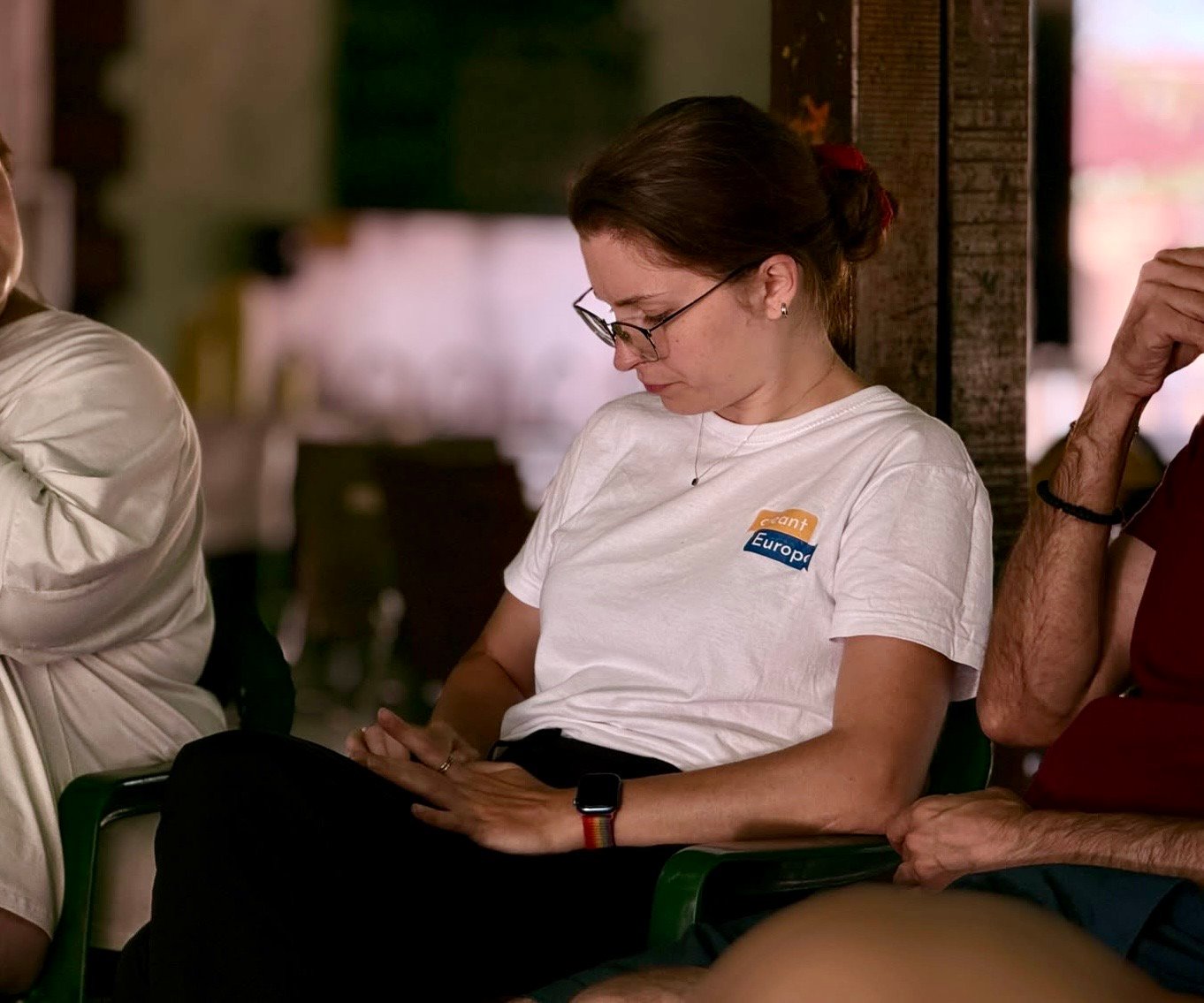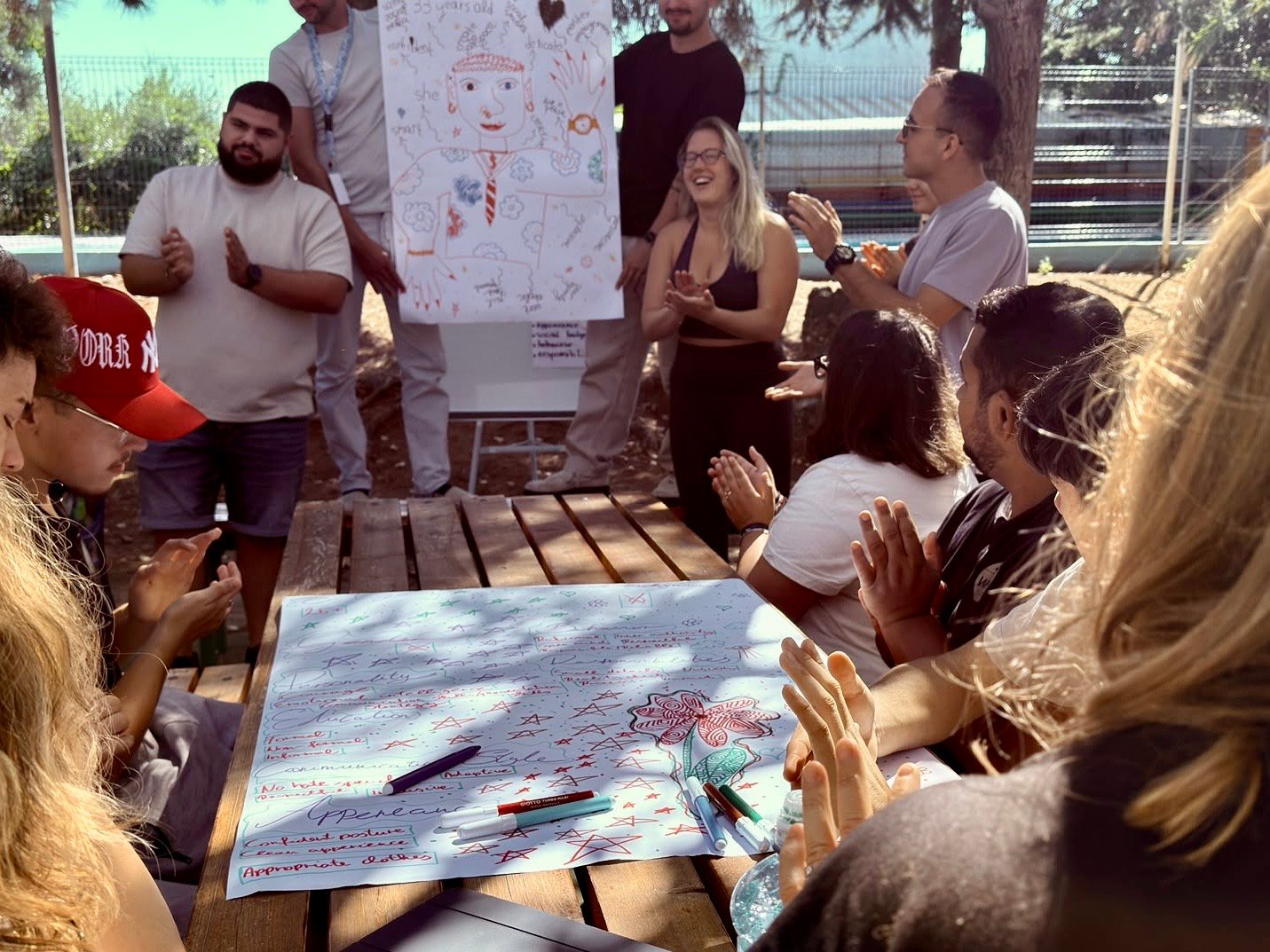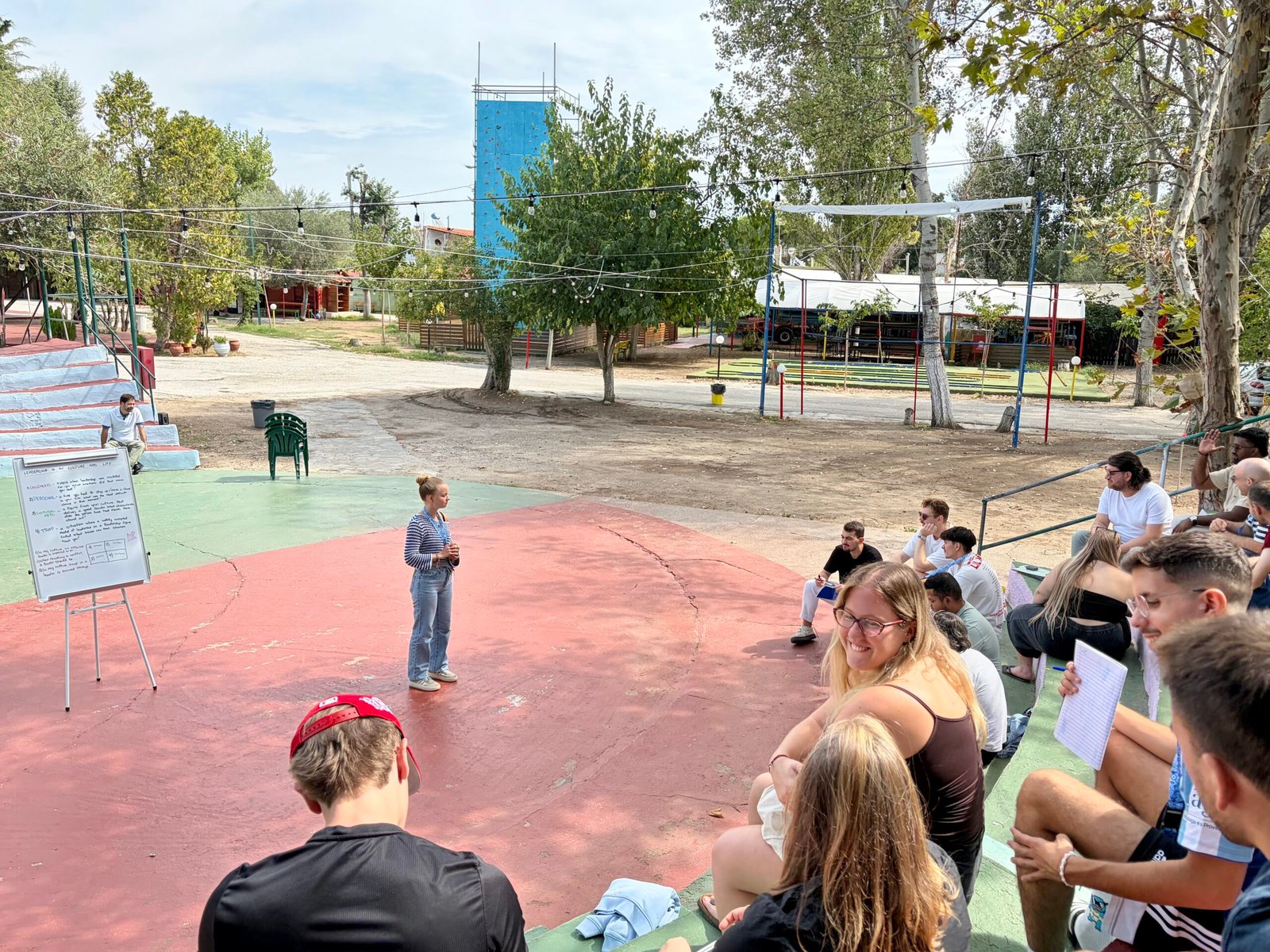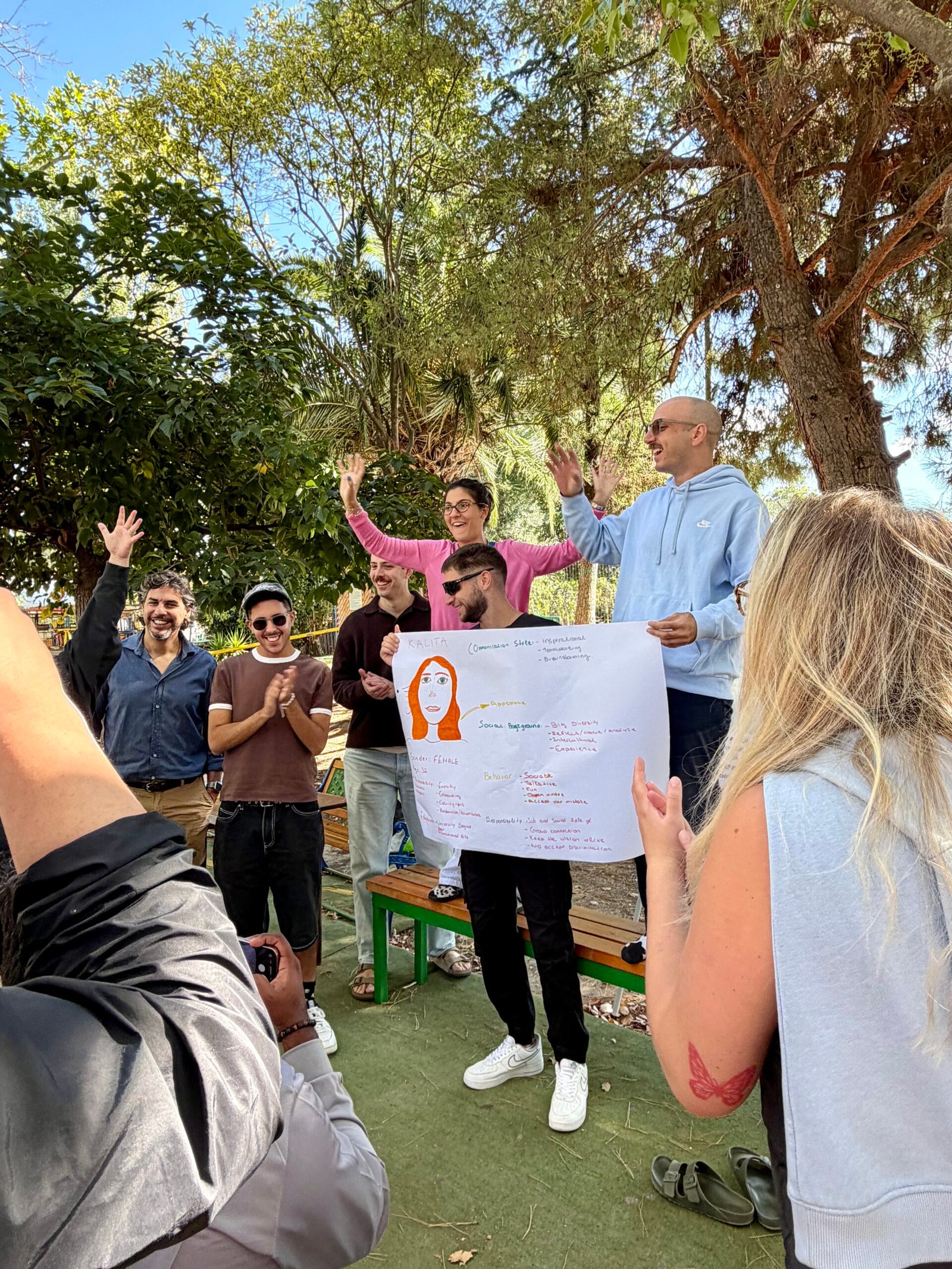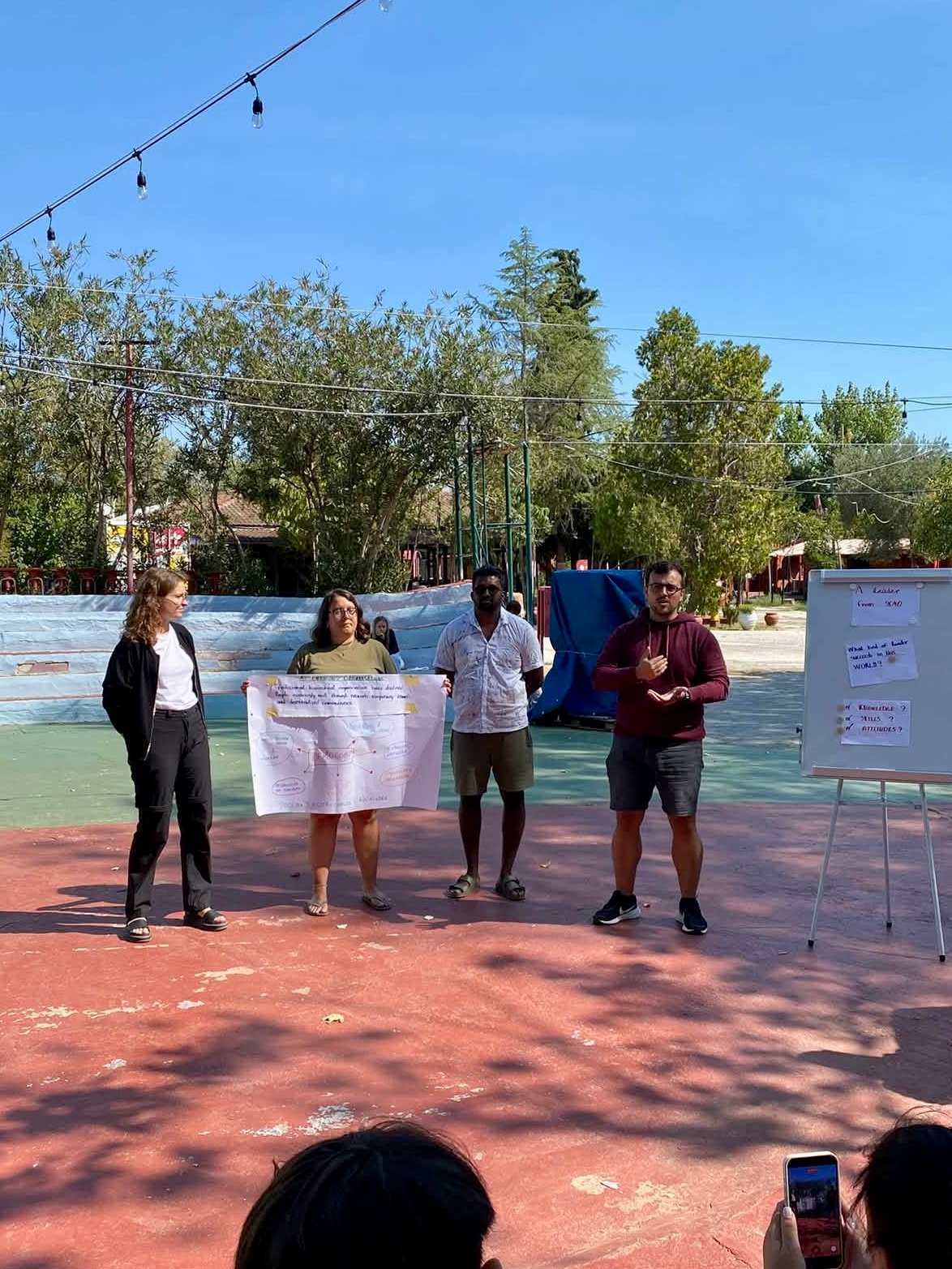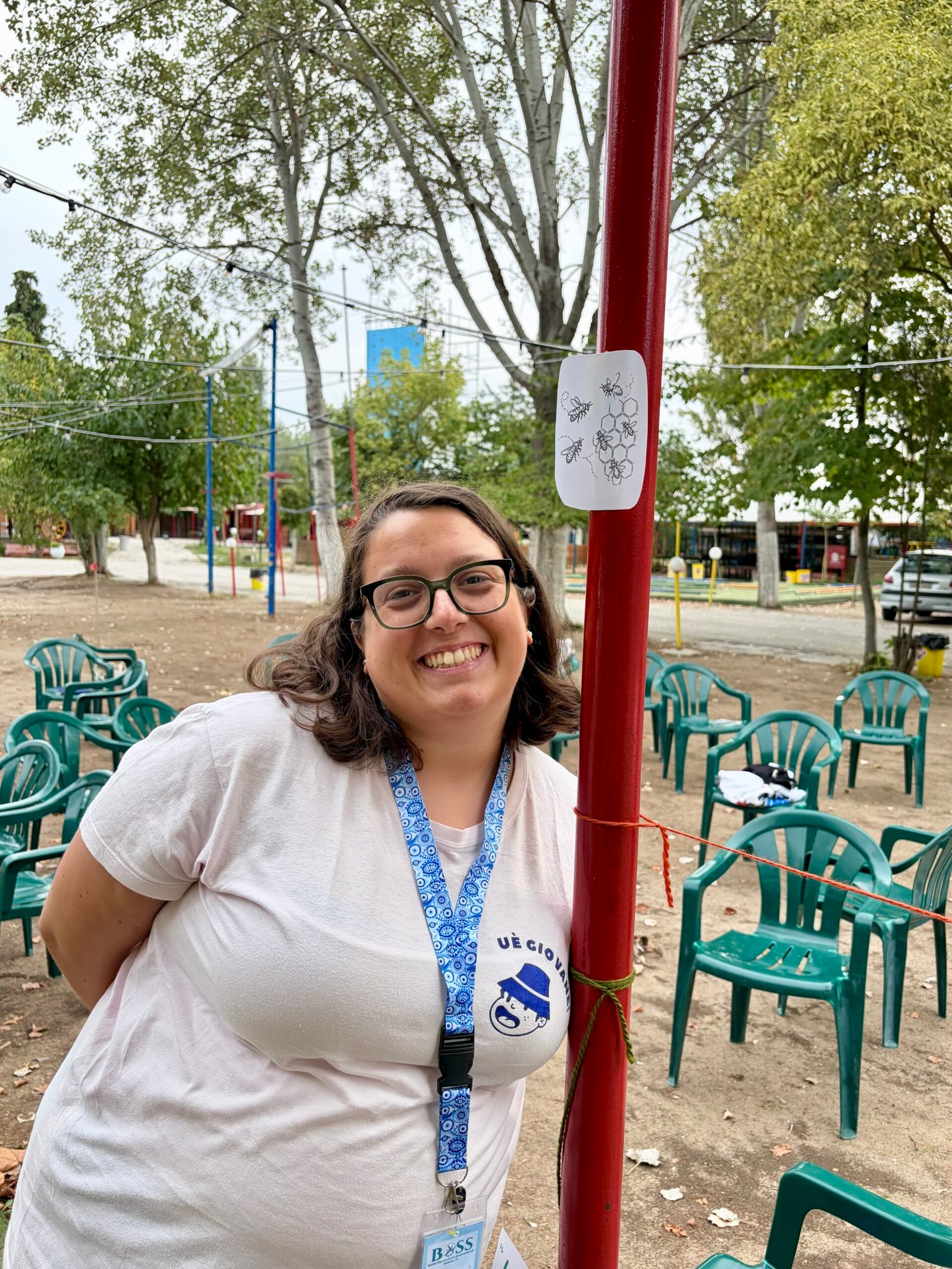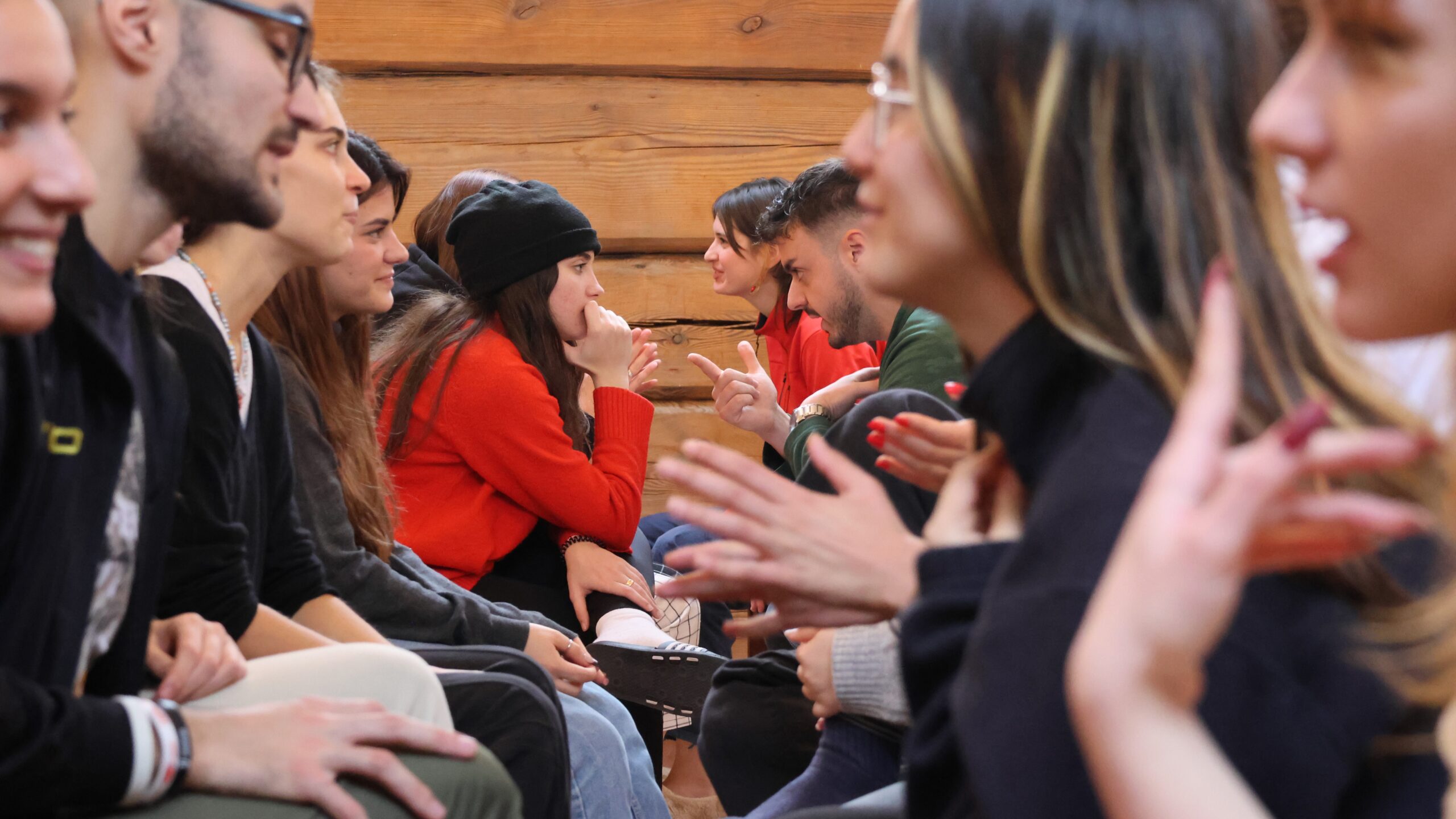
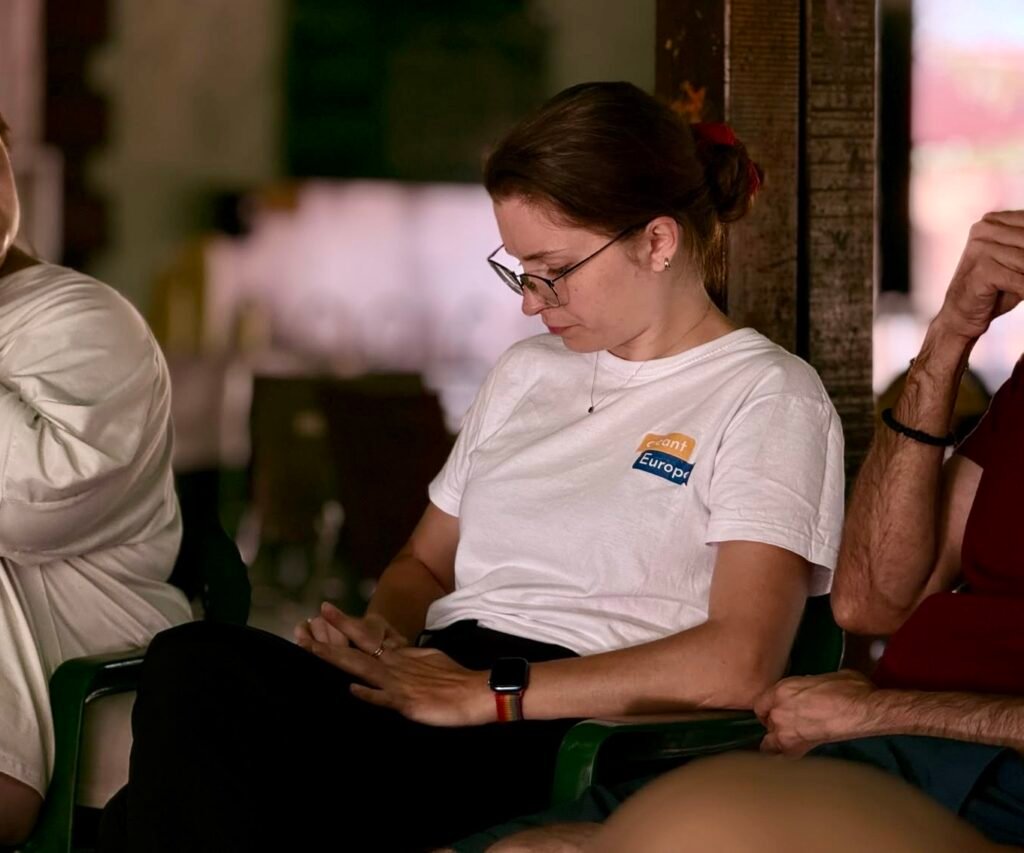
From 13 to 21 September our team was in Greece for B.O.S.S. (Building Opportunities for Sustainability and Solidarity), an Erasmus+ training course organised by our partners PRAXIS. Youth workers, youth leaders and board members from ten countries spent the week talking about leadership: personal leadership styles, leadership in different cultures, social impact and how global challenges can be addressed locally. We also met up with partners we’ve worked with for years and got to know some new organisations.
Leadership is a topic we think and discuss about a lot in Creant Europa. In 2023 we organised a training course called Transformative Youth Leadership, where we started asking how youth organisations can share decision-making with young people and still give them enough structure and support. That training course grew into a cooperation partnership with the same name, which we are implementing with our partners until 2027. So we went to Greece with plenty of our own questions and the week gave us space to discuss them with people from very different contexts.
One thing we talked about a lot is how easily leadership in youth organisations turns into management. For example, board members, among other things, organise meetings, deal with financial questions, write reports, ensure deadlines are not missed. Without a doubt, all of this has to be done, but we believe that these questions are not part of the leadership topic. Leadership is usually described as a process of social influence, where someone guides, motivates and supports others to reach a shared goal. In most definitions that “someone” is one person, however, in youth organisations it works better when that influence is shared, so that different members guide and motivate each other depending on the situation, and young people have the space to take onto those leadership roles.
For these reasons we are very careful with leadership models taken from the business world. Most people in youth organisations are volunteers or members and they are guided by different motivations than in business environment. Sharing leadership does not mean everyone decides everything and, from our own experience, it works best when it is clear who decides what, how new members can gradually take on more responsibility, how dissagreements are handled. We agree that it is more challenging, takes more time and more conversations, but this way young people have the same opportunities to be meaningful members, organisation does not depend on a few people and its activity does not stop when there are changes.
For us, most importantly, leadership is connected to democracy. For many young people, a youth organisation is a great place where they make decisions together with others, disagree and still find a way forward. How the organisation is led affects what they learn about participation, probably more than any workshop on the topic.
Thank you to PRAXIS for hosting us, and to everyone we met during the week!
This training course was co-funded by the European Union through the Erasmus+ programme.