Benicàssim, Spain
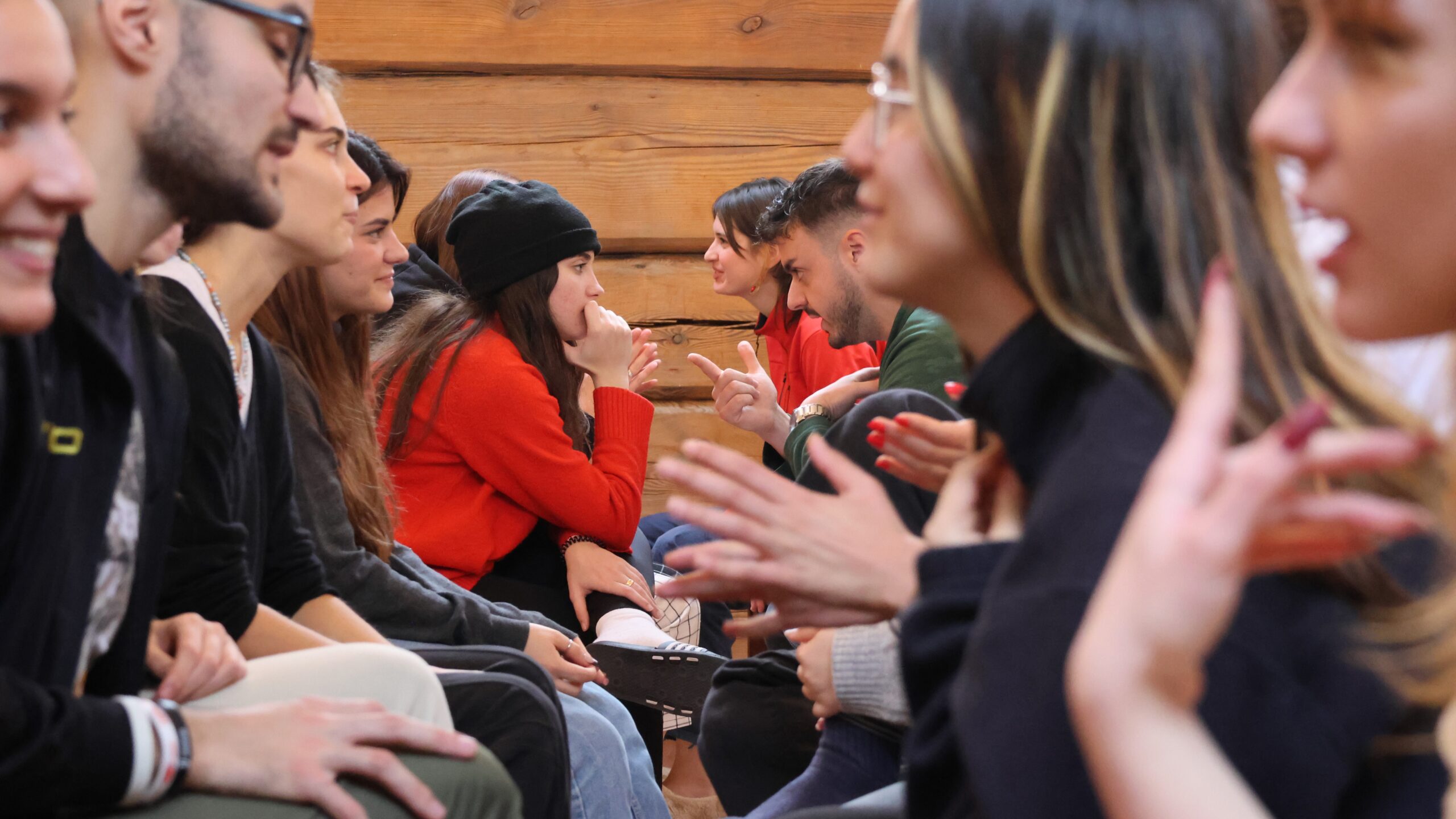
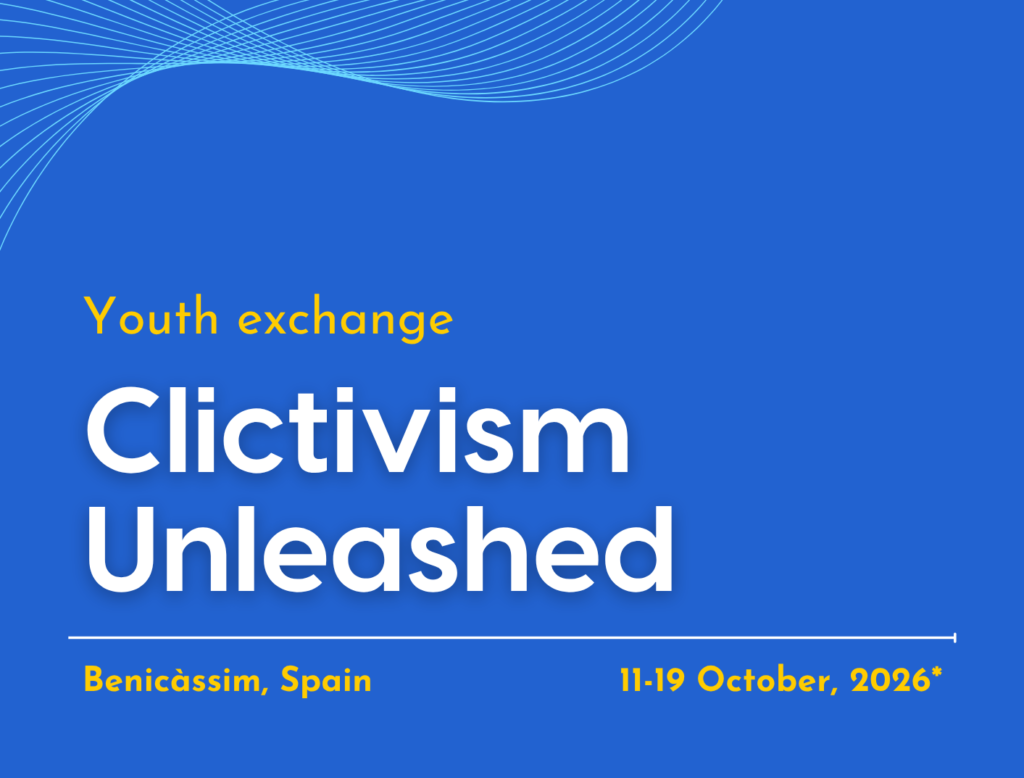
Welcome to the project “Clicktivism Unleashed”, where 37 young people from Spain, Italy, Greece, Romania, Bulgaria, and Sweden will learn together in a nine days-long youth exchange in the beautiful city of Benicàssim, Spain.
The project addresses interconnected challenges by building capacity among young people to design, plan, and execute effective civic campaigns. Specific objectives are:
- Build Strategic Capacities. Train youth in designing, planning, and executing effective, sustainable digital campaigns targeted at civic and social change.
- Overcome Institutional Barriers. Analyze the operational obstacles limiting the impact of digital activism on formal political processes and identify mechanisms to bypass them.
- Develop Communication Competencies. Cultivate key skills in digital storytelling, strategic communication, and the ethical, responsible use of online platforms.
- Address Digital Risks. Raise awareness regarding the structural challenges of cyberactivism, including disinformation, algorithmic bias, and digital access gaps.
- Facilitate Intercultural Exchange. Establish a peer-learning framework where young participants exchange innovative approaches and experiences from different geographical contexts.
- Enhance Civic Agency. Strengthen the sense of local and global community belonging among youth by linking digital efforts to tangible, real-world outcomes.
Who can apply?
- Spanish citizens or residents of Spain from 18 to 30 years old;
- Have a working level of English;
- Have an interest in digital democracy and activism;
- Commit to participate in the dissemination activities resulting from this exchange;
- Holding a valid European Health Insurance Card (or equivalent).
Practical information
- Where? Benicàssim, Spain.
- When? 11-19 October (October 10 and 20 are dedicated travel days), 2026.
- Accommodation, meals and materials are 100% covered by Erasmus+.
- Travel reimbursement: up to 100 € for participants from Spain.
Funded by the European Union. The opinions and views expressed are, however, the sole responsibility of the author(s) and do not necessarily reflect those of the European Union or the European Education and Culture Executive Agency (EACEA). Neither the European Union nor EACEA is responsible for them.